Saturday, November 25, 2006

Xiangju Introduction: Xiamen Min-nan Cultural Gezi Opera Troupe

Xiamen Min-nan Cultural Gezi Opera Troupe, if my gathered information is correct, was established only this year, making this troupe one of the youngest to the Hokkien opera arts scene. Not to be confused with Xiamen Municipality Gezi Opera Troupe which is a government sponsored troupe, this troupe is a professional but self-funded one. The troupe consists of mainly young actors, and although they are based in Xiamen, many of the actors are actually speaking in Zhangzhou accent. In fact, their Zhangzhou accent are so strong that I was wondering if these actors are native Zhangzhou people and not Xiamen.


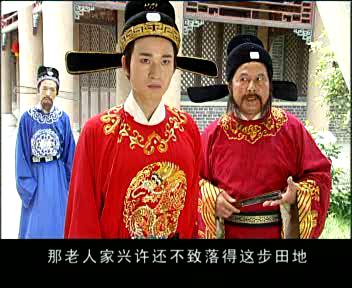
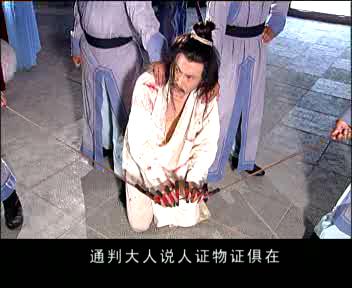
This clip here was taken from the show "Justice Bao Slays The Princess Consort". It tells the story of Pang Xiong, a poor scholar who was saved by a rich man, Chen Qichang, in a flood and was subsequently adopted as his godson. Pang seemed like a refined young man, but he was actually a wolf in sheep's clothing. He seduced Chen's daughter, Xiuying, into having an affair with him, and stole a priceless night-glowing pearl from Chen's son Shirong while he was asleep during their trip to sit for the imperial examinations. Pang topped the imperial examinations, and by chance saved the Princess from a curse with the night-glowing pearl, which was actually a celestial treasure with magical powers. Subsequently, he became the Princess Consort, and Xiuying, who was already pregnant with his child, was left forgotten. Xiuying escaped from home to search for Pang, but was thrown out by him. Afraid that his relationship with Xiuying would hinder his marriage and career, he decided to had Xiuying silenced. Fortunately, Pang failed in his attempt to kill Xiuying, and with the intervention from Justice Bao, the heartless man finally met his desserts and was executed.


Personally, I am not quite pleased with the storyline, for it was far too long-winded. The synopsis I had given earlier was just the essence of the whole show. In the original show, there were other sub-plots like a jade fox spirit trying to create havoc by flooding the Eastern City, Taishang Laojun gave Chen Qichang the magical night-glowing pearl as a protective charm, the Jade fox spirit put a curse on the Princess to make her go crazy, and so on. To be honest, I don't think all these sub-plots do not really contribute much to the main storyline, and can actually be cut down to make the story more streamlined. Another area which I'm not very pleased with the troupe is the standard of the musical ensemble. Though their music is not too bad, the musicians' poor playing skills pulled down the quality of the musical ensemble's standard. As for the cast, I feel that only the female lead was better, while te rest of the actors were just average. Their costumes, though traditional, sometimes can be a disaster too, when the actors fail to wear according to the role they are portraying. For example, the actors assuming the roles of celestial soldiers were wearing normal wusheng costumes, hence failing to differntitate themselves from mortal soldier roles. These roles might have been very minor roles in the show, but I believe this point should still be observed. The costume wore by the jade fox spirit was weird also, looking more like a cross between a foreign princess and Dou'E from "Snow in June".

Despite my many negative feedback about this troupe, I am still hoping to see more of this troupe. Perhaps I'm positively biased against them since I'm of Xiamen ancestry, and I'm giving leeways because they are still a very new troupe. However, if they fail to work on these weakness and improve themselves, I'd have to classify them together with the other lousy troupes that had utterly disappointed me.


Xiangju Introduction: Zhangzhou's Shaoquan Gezi Opera Troupe

Zhangzhou Shaoquan Gezi Opera Troupe was established in 1990 by Xiangju opera actor Zhuang Shaoquan. Although the troupe had got a relatively short history, it was nevertheless one of the more well-known one among the professional, non-government sponsored troupes. Not only were their scripts well written, their performances were of high standard. The troupe also have have young actors, many of which were either 3rd-graders or had won awards in opera competitions before.


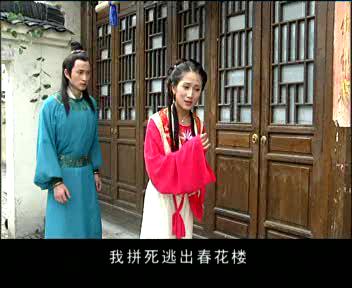
This clip featured here is taken from their show "Qing Zhu Si", adapted from a popular folklore from Anxi region, Quanzhou. It tells the story of Xiauo Chunju, the wife of trader Wang Xiang, who had an affair with a local scholar ("Ju Ren"). After their extra-marital affair was discovered by Wang Xiang, Chunju and her lover tried to poison Wang Xiang by forcing a poisonous snake "Qing Zhu Si" down his throat. Anxi Magistrate Huang Tizhong wanted to solve the case, but could not find any visible evidence on Wang Xiang's body. One night, the Cheng Huang God appeared in Huang's dream, and tipped him off. With the clues given by Cheng Huang God, Huang finally crack the mystery, and had the real culprits nabbed.


When I first heard of this troupe, I wasn't very confident of the troupe. For one, the troupe is from Zhangzhou, and second, it's a non-goverment sponsored troupe. I've watched a few Zhangzhou troupes' performances before, and so far there were only one or two troupes which I can consider good. For those "blacklisted" troupes, either their costumes were a disaster, or the actors could not sing to save their lives, or that their scripts were simply non-exsistence. For Shaoquan Gezi Opera Troupe, fortunately all these negative points were not applicable. In terms of script, I find that it was well-written, without being too lengthy (as with many other similar troupes; a simple story can actually span into a 2-day show!). As for the music, I find it very soothing to the ears, especially their "zasui" tune. At times they sounded quite like the "duma" tune of the Taiwanese opera in the 60s, and I find it very nolstagic. Most importantly, when they combined traditional Xiangju tunes with Taiwanese opera tunes in their show, they are able to blend in with one another, instead of sounding weird. In terms of acting, I think the actors were competent in their respective roles, though I find that the actors who took on the roles of the local scholar and Wang Lanying (Wang Xiang's sister) just average. One thing I had to say is that the actress who acted as Xiao Chunju (featured in this clip above) acted and sang quite well. At lease she doesn't have the squeaky voice like many typical Zhangzhou dans. As for their costumes, their wardrobe had better looking costumes than some other Zhangzhou troupes. Some other troupes which I've seen tried to imitate the costumes worn in Taiwanese opera, but in the end turned out to be a fashion disaster.

In short, I find that this troupe has got a strong cast, music ensemble and production crew. This gave me more confidence in the standards of non-government sponsored Xiangju troupes in Zhangzhou.

Tuesday, November 14, 2006

Yueju Crossover part 4

Below are 2 clips of Qian Huili and Fang Yafen singing arias from "Romance of the Red Mansion" and "Lu You and Tang Huixian" respectively. Qian Huili was trained in Xiaosheng roles singing in Xu-style, whereas Fang Yafen was trained in Huadan roles singing in Yuan-style. The expressive Xu-style of singing is best known for frequent leaps into high notes, hence requires the singer to have a wide vocal range. The Yuan-style of singing was created by Yuan Xuefen, and it was her who paved ways to the creation of other singing styles by other Yue opera masters.


Qian Huili and Fang Yafen are famous Yue opera actresses from Shanghai Yue Opera Company. Their near perfect image on stage made them idols to many Yue opera lovers. However, in this next clip, they sacrificed their wholesome image to play the clownish roles of Third Aunt and Master Shi respectively. Zhang Hailing, a versatile actress from the same opera company who was able to switch between Laosheng and Laodan roles easily, took on a Huadan role in this clip singing Lyu-style instead.


My verdict:
This is the most enjoyable clip in this series, as Fang Yafen and Qian Huili's portayal of Third Aunt and Master Shi were really beyond my expectation. They were so comical that I just can't stop laughing. However, that doesn't make them any less serious. In fact, it was their seriousness in their role that make their renditions a success. Zhang Hailing, on the other hand, did not stand out as much as her role was more of a "serious" one. Her acting and singing were good, but her chubby size made her look a bit comical.

My ratings:
Qian Huili's singing

Qian Huili's acting

Qian Huili's entertainment value

Overall rating for Qian Huili


Fang Yafen's singing

Fang Yafen's acting

Fang Yafen's entertainment value

Overall rating for Fang Yafen


Zhang Hailing's singing

Zhang Hailing's acting

Zhang Hailing's entertainment value

Overall rating for Zhang Hailing

Monday, November 13, 2006

Yueju Crossover part 3

Wu Fenghua is a famous Fan-style Xiaosheng from Shaoxing Yue Opera Troupe while Chen Ying is Fu-style Huadan from Shanghai Yue Opera Company. Below are the clips of both actresses singing excerpts from "The Butterfly Lovers" in seperate renditions.


The Fu-style of singing was created by Fu Quanxiang, who has always been compared to the Coloratura sopranos in western operas, as her flowery singing style requires one to sing in a wide vocal range and usually accompanied by frequent leaps into high notes and pitch slides. In the next clip, they'd switch genders and act as the Princess and her consort respectively in "The Arrogant Princess". The role of the Princess is usually sung by a Lyu-style Huadan (also another of Coloratura-style) whereas the role of the consort is sung by, well, a Fan-style Xiaosheng.


My verdict:
Wu Fenghua's Xiaosheng roles were very good, but however, when she crossed over to the Huadan category, she paled in comparison as her "manliness" could still be found. Hence although she tried to be as gentle as she could, she still felt more like a authoritative Empress than an arrogant Princess. However, the part where she started crying like a little girl after being slapped by her consort made me feel sorry for her, and that managed to win back some points for her. There wasn't much to talk about in terms of her singing as I feel that it sounded close to what a Lyu-style singing should sound like. Overall, I feel that Wu Fenghua's portrayal of the Princess rather cute, as I can never imagine her to take on such roles. Chen Ying, however, was a bit of a disappointment. Her singing as a Fu-style Huadan was good, but not when she tried on the Fan-style. It made her sounded very amatuer, and was one of the poorest among the other actors. Her shen duan, however, was still within my expectation. I have not seen the original version of this show, so I don't really know how the consort actually hit the Princess, but in this version, the consort only gave his princess wife a light smack across the face, which I thought was very comical.

My ratings:

Wu Fenghua's singing

Wu Fenghua's acting

Wu Fenghua's entertainment value

Overall rating for Wu Fenghua


Chen Ying's singing

Chen Ying's acting

Chen Ying's entertainment value

Overall rating for Chen Ying

Yueju Crossover part 2

The following 2 clips features Shan Yangping and Huang Hui from Shanghai Yue Opera Company singing excerpts from "Romance of the Red Mansion" and "The Righteous Yan Lanzhen" respectively.


Shan Yangping is a Wang-style Huadan, it's signature characteristic being frequently sliding between low and high notes in the same song, and that sometimes at the end of each verse, the notes would be sung in a cadenza. Huang Hui, on the other hand, is a Lu-style Xiaosheng. This style of singing doesn't require one to sing in a wide vocal range, but is still able to captivate audience with it's simplicity and elegance. In this next clip from "Legend of He Wenxiu", Shan Yangping took on the lead role of "He Wenxiu", originally acted by Yin-style Xiaosheng and Huang Hui took on the role of Wang Lanying, originally acted by Yuan-style Huadan. Two other supporting roles were featured in this clip, Madam Yang impersonated by Bi-style Xiaosheng Ding Xiaowa and Yang Jinding impersonated by Xu-style Laosheng Jin Hong.


My verdict:
I have no doubts about Shang Yangping's rendition of a xiaosheng, since she had acted the role of Meng Lijun (who had to disguise herself as a male to save her husband-to-be) for over a 2 decades. I was pleasantly suprised that her acting as He Wenxiu was more "manly" compared to Meng Lijun. However, her singing was not within my expectation, as her voice was afterall, not "nasal" enough to sing the Yin-style. Huang Hui's rendition of Wang Lanying was not bad; her singing was close to Yuan-style, and her shen duan is good. However, her looks was a bit weird. I've seen her crossdressed as Laodan before in a crossdress rendition of "The Jade Hairpin", but she didn't look that strange at that time! I guess it could be her makeup, which spoilt her otherwise delicate looks. One thing I must comment is that Jin Hong's impersonation of Yang Jinding was out of my expectation. Jin Hong was known for her villian or strict-faced roles, but I could never imagine her to act as a cute and innocent girl like Yang Jinding.

My ratings:
Shan Yangping's singing

Shan Yangping's acting

Shan Yangping's entertainment value

Overall rating for Shan Yangping


Huang Hui's singing

Shan Yangping's acting

Shan Yangping's entertainment value

Overall rating for Shan Yangping

Yueju Crossover part 1

For those who love Yueju opera, it shouldn't take long to recall what shows and roles Wu Fenghua, Qian Huili or Fang Yafen featured in. However, are you able to visualise them "crossdressing", that is, switch over to act the opposite hang dang in which they were not specialised in?

The first two clips here features Xu Ming from Hangzhou City Yue Opera Troupe singing an excerpt from "The Butterfly Lovers" and Zhang Ruihong from Shanghai Yue Opera Company singing an excerpt from "Female Premier Meng Lijun".


They were trained as xiao sheng and specialised in the Fan-style of singing, which is famous for it's ornamented and prolonged ending notes for each line. However, in this next clip here, they took on the role of Madam Chen and Sun Gumei respectively from the show "The Annulment". The role of Madam Chen, a mix of was to be taken onLaodan and Caidan, was to be acted by a Caidan actress while the role of Sun Gumei, a Huadan, was to be acted by a Fu-style Huadan actress.


My verdict:
Xu Ming's rendition of Madan Chen was really comical, and it's hard to imagine that she was in fact a Xiaosheng if you had not known her before. Zhang Ruihong's initial appearance on stage made me laugh, because I thought she looked weird, but her imitation of Fu-style singing was quite close to how Fu Quanxiang (the founder of this style) sang. However, her shen duan was too stiff for a Huadan, and she seemed a bit hunchedback at times. These made her performance weaker in comparison to Xu Ming.

My ratings:
Xu Ming's singing

Xu Ming's acting

Xu Ming's entertainment value

Overall rating for Xu Ming


Zhang Ruihong's singing

Zhang Ruihong's acting

Zhang Ruihong's entertainment value

Overall rating for Zhang Ruihong

Tuesday, October 03, 2006

Review: The Case of Taiping County's Illegal Salt Syndicate (Shaoxing Yue Opera)

Title: The Case of Taiping County's Illegal Salt Syndicate (太平私盐案)
Genre: Shaoxing Yue opera (越剧)
Format: Opera drama series
Production year: 2001
Director: Zhang Zhiming
Script: He Renshan, Qian Linsen
Casts: Lou Yonghuan as Li Pu (voice-over by Zhang Weizhong) and Li Yu, Tang Ji'na as He-hua (voice-over by Chen Fei), Zhang Gong as Sun Jizong, Hua Weiqiang as Cai Bao, Shu Jinxia as Mrs. Cai, He Juanjuan as old Mrs. Cai, Zhang Weizhong as Emperor (cameo appearance)


At first glance...

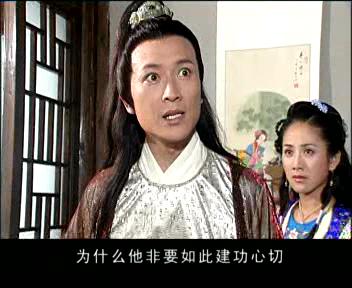
This 4-part opera drama series is an award winning video production by Zhejiang Literature & Arts Audio-Video Publishing House shot in 2001, and performed by Zhejiang Province Yue Opera Company. Although the male and female leads of this show were relatively new actors from Zhejiang Province Yue Opera Company and Hangzhou City Yue Opera Company respectively, this show was still a star-studded one. Celebrity actors like Zhang Weizhong and Chen Fei lent their voices to the main roles, while experienced actors like Zhang Gong, He Juanjuan and Shu Jinxia took on other very minor roles.


Synopsis

The district officials of Taiping County were rumoured to be involved in a big case of illegal salt trading. Although the imperial court had sent three inspectorates to investigate, they could not find any evidence against the craft district officials, who were actually in cahoots with the local businessmen. One day, Cai Bao, a junior official in Taping County, discovered their secrets, and was thrown into jail, in an attempt to silence him. At this point of time, news had it that the imperial court has sent it’s 4th inspectorate, Li Pu, to Taping County. Li Pu was once a poor scholar who had recently topped the imperial examinations. Being full of aspirations, he volunteered to take on the task to look into the case. Li Pu’s twin brother, Li Yu, became his chief constable.

Li Pu and Li Yu may be twins, but their characters were not totally the same. While Li Pu was more matured and level-headed, Li Yu was more simple-minded and impulsive. Sun Jizong, the head of the illegal salt syndicate, made use of Li Yu’s weakness against Li Pu. He sent a beautiful woman by the name of He-hua to get close to Li Yu, and tried to brainwash him. Li Yu was taken in by He-hua’s words, and was made to believe that by standing in his brother’s way to justice was the only way to save Li Pu from harm. He was even tricked into silencing Cai Bao, the key witness to the case. Li Yu subsequently realised his follies, and decided to turn himself in.

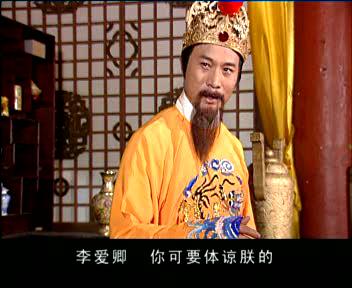
While turning himself in, Li Yu handed over an accounts book which was a very important piece of evidence against the district officials and the local businessmen. However, there was a big hurdle for Li Pu; Sun Jizong’s grand eunuch brother knew about Li Yu’s matter, and in order to save his own brother, he counter-accused Li Pu for covering up for Li Yu. The case was brought up to the emperor, and taking into consideration of Li Pu and grand eunuch Sun’s merit, the emperor decided to pardon both Sun Jizong and Li Yu. Li Pu, however, insisted that both culprits be punished in order to uphold justice. The emperor had no choice, but to pass the death sentence to Sun Jizong and Li Yu.

Review

Personally, I wasn’t really a fan of opera drama series, as I feel they simply lack the magically feeling of a stage opera. One of the key problems was that opera drama series had to adapt to the style of TV drama, and hence had to do away with a lot of Chinese opera essence, and this in turn makes the show less “operatic”. Although the plot of the show was not too bad, the shooting style of the show was nothing much to praise about. In fact, there were quite a number of scenes which I find very awkward. Although the main actors for this series were professional actors, they just do not seemed at ease acting in front of a camera, and in some singing scenes, they simply walked to and fro in front of the camera while singing, and doing some simplified operatic gestures. If I had not known their names and identity, I would have thought that these actors were just average actors not trained in the field of Chinese opera!

For the cast, I feel that the supporting actors were actually much stronger than the leading actors. Lou Yonghuan of Zhejiang Province Yue Opera Company took on the roles of Li Pu and Li Yu. In order to distinguish between the two different roles, the voice and singing of Li Pu was dubbed over with Zhang Weizhong’s voice (he made a cameo appearance as the emperor in this show), while Lou Yonghuan spoke and sang the parts of Li Yu. In my opinion, Zhang Weizhong used to be a good singer in the 80s, but in this show, his voice seemed to have deteriorated a bit. However, I still find his voice quite good, as compared to Lou Yonghuan’s own singing. Tang Ji’na from Hangzhou City Yue Opera Company took on the role of He-hua, but her dialogue and singing parts were all dubbed over by Chen Fei. Both Lou Yonghuan and He-hua, though looked good on stage, was only average in terms of acting. Experienced actor Zhang Gong, who took on the non-singing role of Sun Jizong in the show, performed much better as a baddie. The actors taking on the roles of the district officials were average, but they had got the sinister feel in their acting while made me feel like slapping them.

As for the script, it was well-written with quite a bit of twists along the way. However, the first two episodes of the show were too slow-moving, and I just couldn’t focus on the show. The last two episodes were much better, with a faster tempo. I think the show could even be condensed into a 3 part series.

On the whole, I find this show just average. There were some nice parts here and there, but there were many other scenes which I think were not well done. If not for the celebrity cast, I think this show would be more a flop.

Ratings


Script

Music

Directing

Casts

Final rating

Sunday, September 24, 2006

Chinese Opera DIY: Making A Chinese Opera Wig From A Conventional Wig

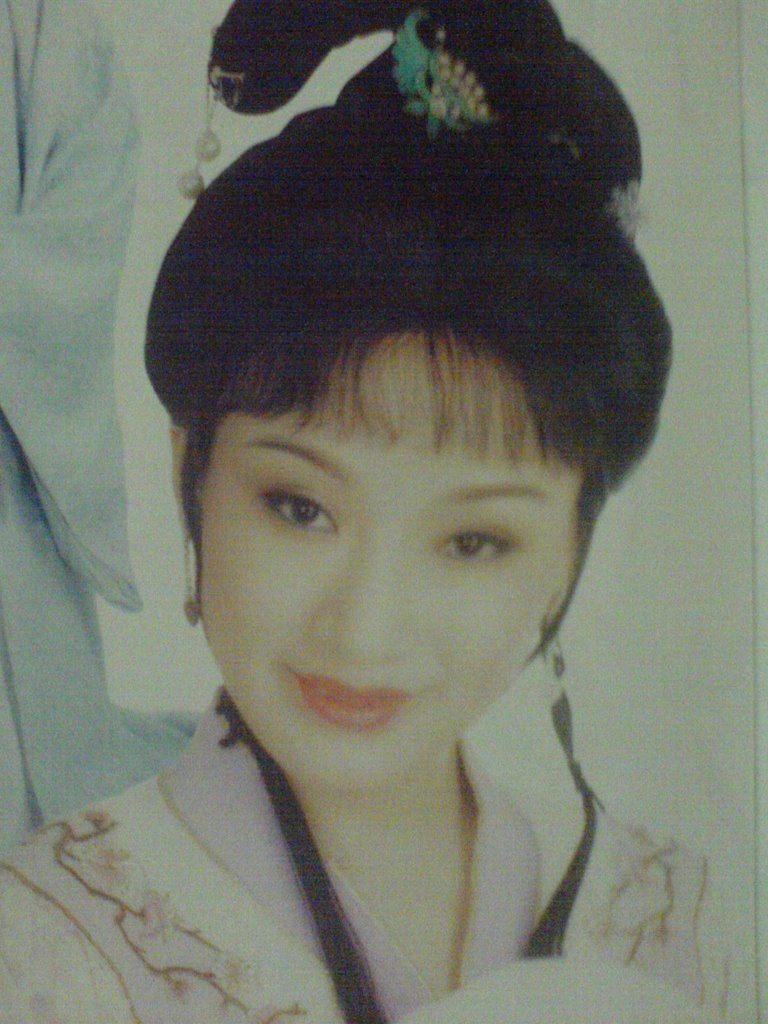
On the Chinese opera stage, wigs are used extensively for female roles, and sometimes for male roles too. Chinese opera wig is already hard to get in Singapore due to the size of the potential market, and what you can often get locally are the badly styled ones. Therefore, many Chinese opera artistes would fly over to Taiwan or China to buy, but it is not cheap, even if you do not take into consideration the cost of the air ticket.

So what can an aspiring actor with a small budget do to own a Chinese opera wig? Well, he or she can make them out of a normal wig! Of course, you can't use any wigs you find in the wig shops just as they were because they looked way too modern, even for those plain straight ones. You would still have to style them first. There are hundreds of different kinds of wigs available in the market, and how should one go about choosing it? Let's start off from the fundamentals.

In vague terms, wigs can be classified as synthetic wigs and real hair wigs. As the name implies, synthetic wigs are made of synthetic fibres while real hair wigs are woven from real human hair. A real hair wig can cost many times more than that of made of synthetic fibre, but you can style it over and over again, whereas synthetic fibre wigs are not really meant to be restyled, and excessive or rough combing can actually damage the fibres permanently. (You can check if the wig’s made of real hair or synthetic fibre by snapping a strand of the hair; if it's real hair, it should just snap into two, whereas synthetic fibre would stretch, snap and shrink into a frizzy strand.) For economical reason, a synthetic wig would do just find.

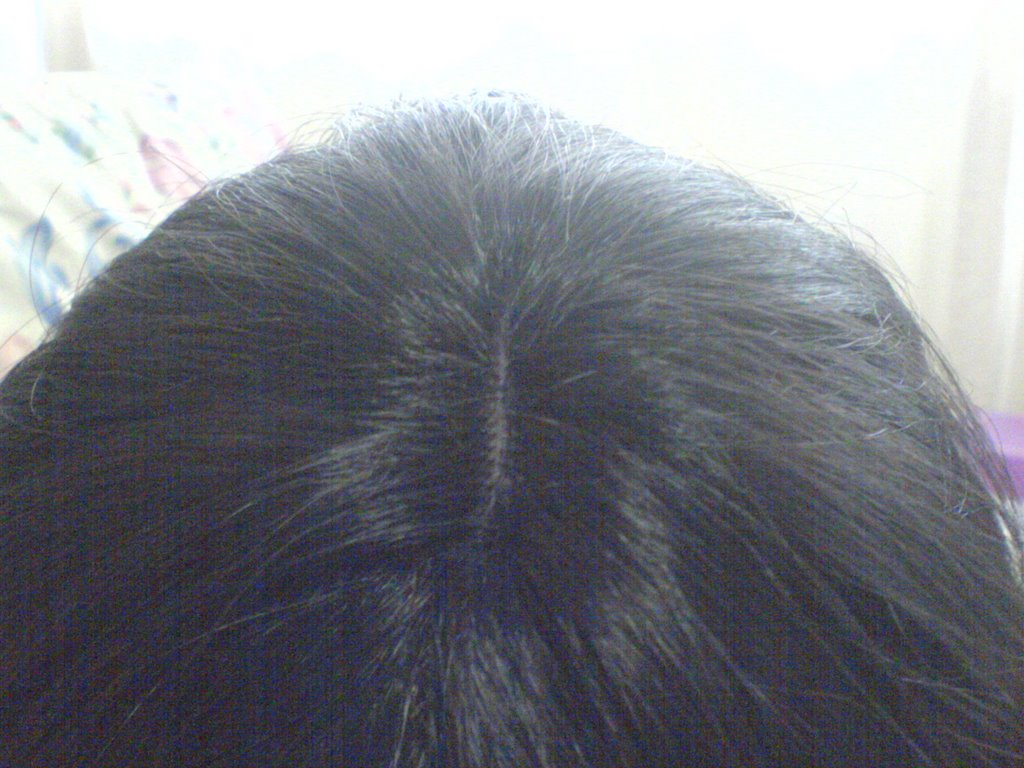
The next thing we should look at is the style of the wig. The wig, obviously, would have to be long (at least till chest level after wearing it), straight and black. One important aspect to take note is that the wig must not have any fringe, even though you may want your completed wig to spot one. The reason is because we would need to comb up the crown area of the wig up into buns to look like those in the Chinese opera wigs. If there is already a fringe on the wig, the hair on the crown area could be too short to be combed up. If you really want the final wig to spot a fringe, you should get the fringe cut only after styling. Another thing to take note is that the wig should be at least has a monofilament crown. A monofilament is a term to describe how the inside of a wig is constructed. One of the features of a monofilament wig is to allow the wig wearer to part their wig in any direction without revealing their real hair (or lack of) underneath. This is especially important, because we might just reveal the wig's netting around the area where you comb up the hair, and it would look very ugly.


A monofilament crown wig showing off some "skin" beneath


A monofilament crown wig with portion of hair combed up, not revealing whatever beneath the wig


A non-monofilament crown wig with portion of hair combed up, revealing whatever beneath the wig


Besides the wig, we should also have some rats ready. No I do not mean those creatures with 4 legs that go munching through all your electrical cables. These "rats" are actually stuffed hair buns which are used to create volume during hairstyling. Sad to say, rats are out of fashion in Singapore already, and I can't seemed to find any locally anymore. However, one can still make one themselves by stuffing crepe hair into fine black stocking. Of course you do not need rats as long as a stocking. A rat about one-third that of the size of a fist should be big enough, and depending on the style you want to make, you would need about 2 to 3. You may consider making a few more of various lengths and density, which can be used to add height and volume of your wig for different roles.

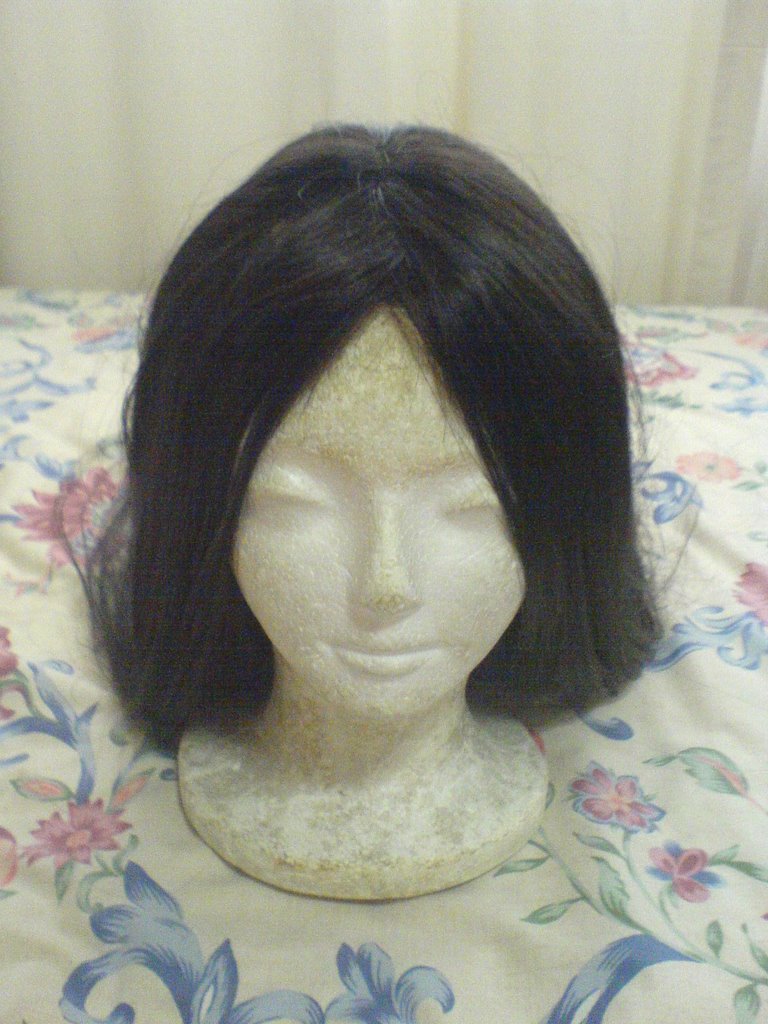
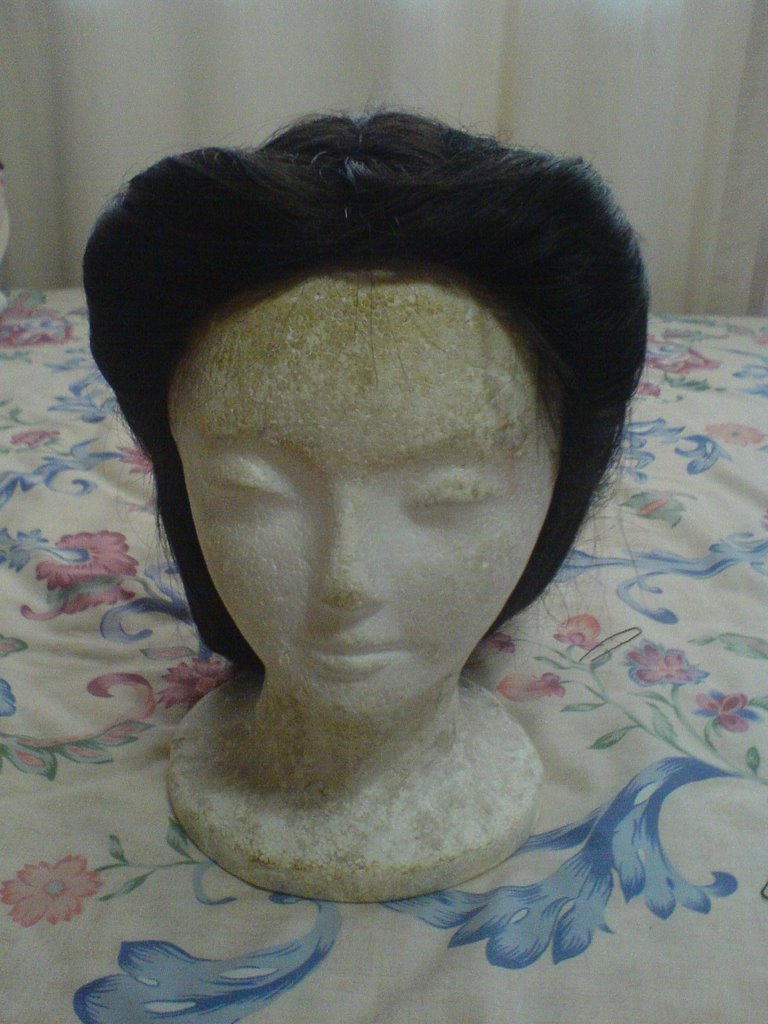
Other things we need to get in advance are hairpins, black rubber bands, and a foam wig stand. First sit the wig securely over the wig stand, then part a fraction of the hair on the crown section of the wig, and comb them to the front. Secure 2 rats on both sides of the crown, near the temple region, and comb the parted hair neatly over it rats. Remember to leave some of the hair for the fringe, if you intend the final wig to spot one. After combing the hair over the rats, ensure that the rats were totally covered. Tie the combed hair behind the rats in a way that the hair is wrapped around the rats tightly with no loose hair coming out in any directions, or the rats being exposed. You might have to redo these steps over and over again, in order to try to find the correct position for the rats, as well as the correct size and shape for your buns. Now that you have 2 buns on the wig, secure the position of the buns onto the wig with hair pins.


A "raw" wig on wig stand


Parting a portion of hair from the wig and positioning the rat


Combing the parted hair neatly back over the rat


Tie the combed hair behind the rat into a tight bun


Half finished wig with one bun each on both sides


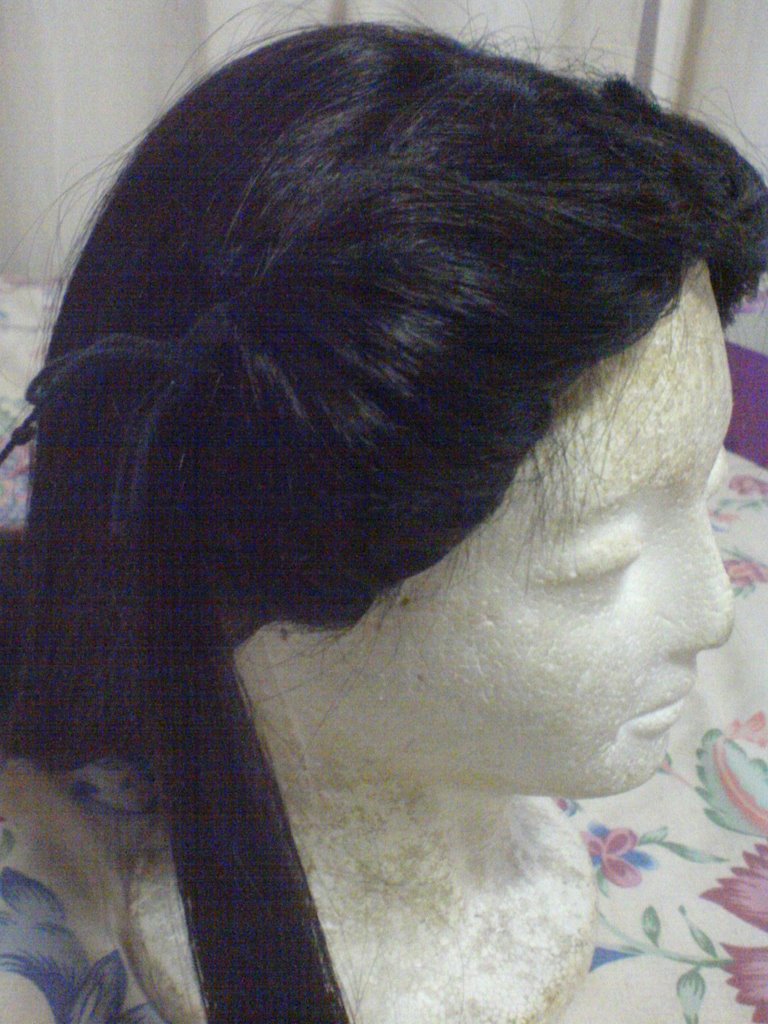
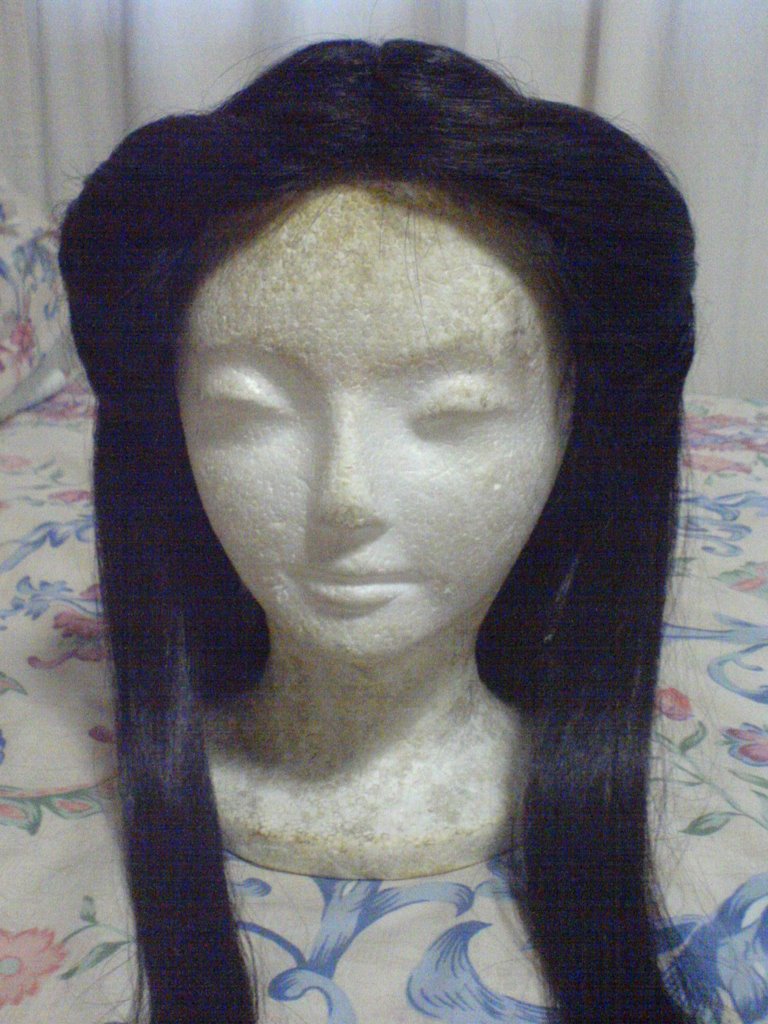
There you are, your wig is almost done! To make the wig even neater, you can pleat up the two tassels of hair behind the bun and secure them in an obscure position, while tying the hair behind with a ribbon into a bunch. If you have left a portion of the front hair for the fringe, remember to have it cut and style by some professionals! Do not attempt to do it on your own unless you're very experienced with it, or you may just ruin the fibres (especially so if it's synthetic wig).


Back of hair neatly tied into a bunch (completed)


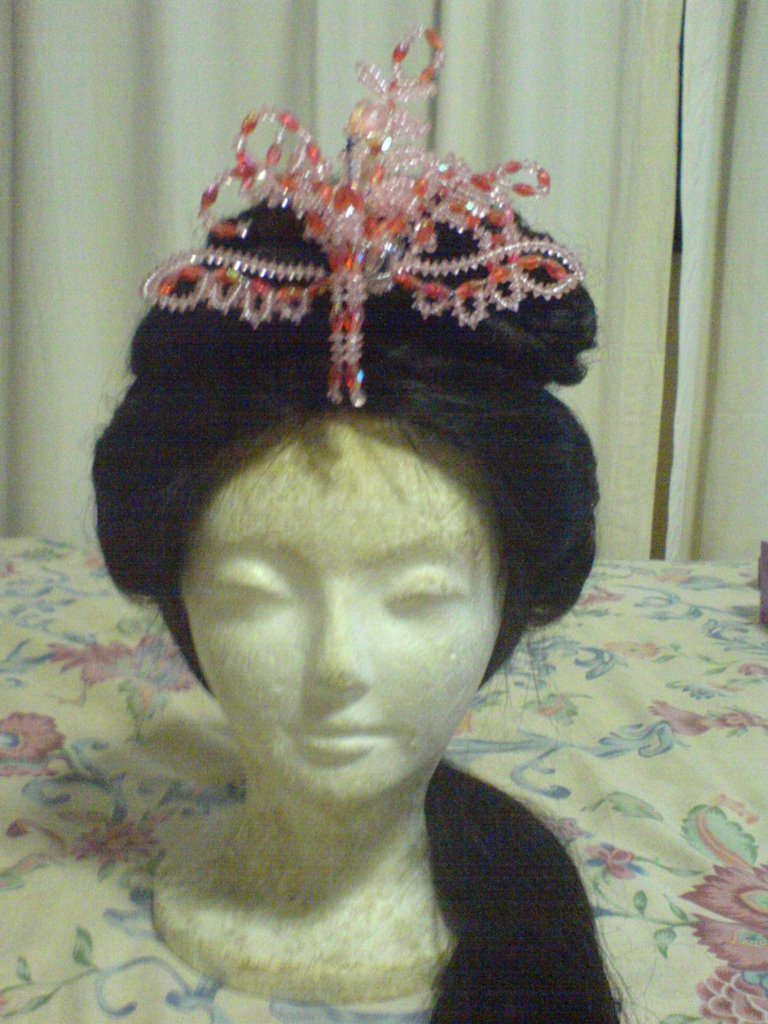
Completed wig with additional rats attached and secured to add volume and style for character portrayal


Previous wig with additional hair acceossories