Sunday, April 30, 2006

Just One Look : The Look That Wowed Audiences 3

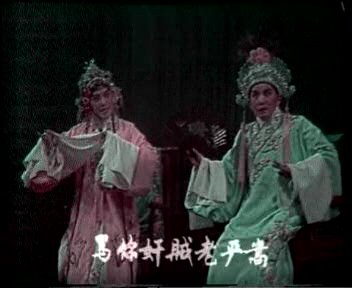
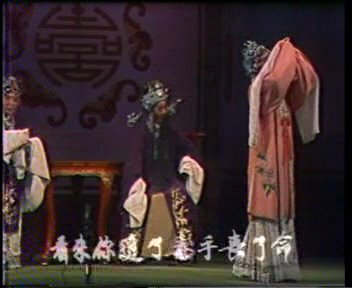
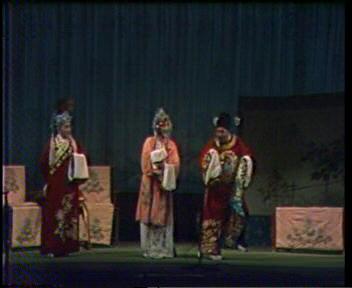
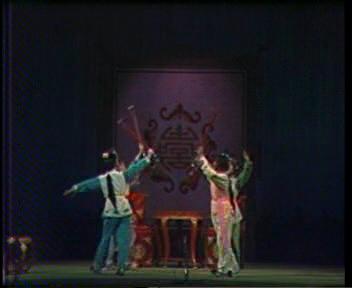
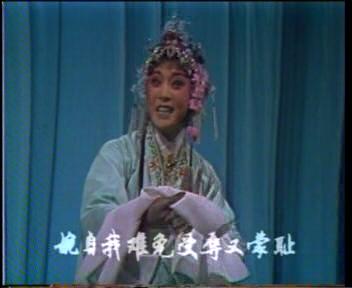
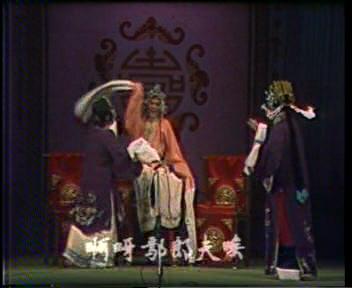
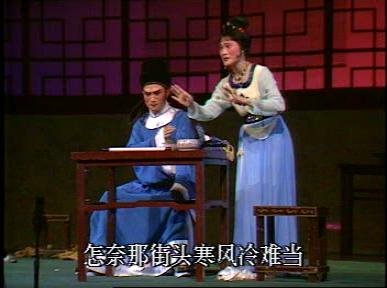
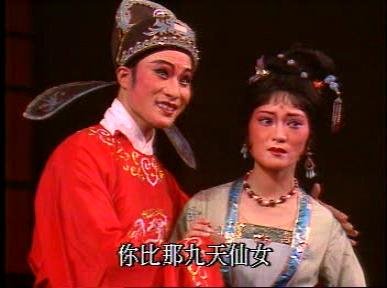
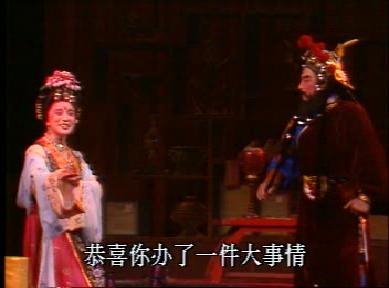
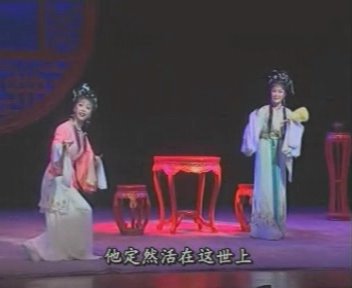
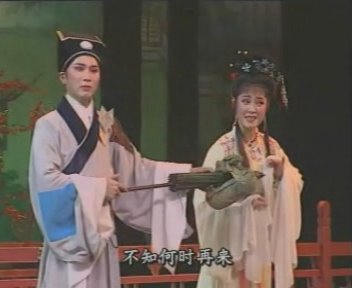
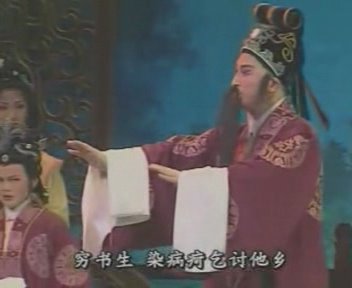
In this third part of the series, I've attached a clip of Wuxi opera, "The Pearl Pagoda" performed by the Wuxi City Xiju Opera Troupe.


"The Pearl Pagoda" tells the story of a poor scholar Fang Qing, who was actually the descedant of the late primt minister, was shunned by her paternal Aunt when he turned up on his uncle's birthday feast to seek financial assistance. She even mocked him by saying she would carry an incense altar over her head to welcome him if he ever make it big in future. Fang Qing felt insulted and was about to leave but was stopped by his cousin Chen Cui'E. Miss Chen had always liked her younger cousin, and in order to aid Fang Qing, she decided to present her family heirloom, the Pearl Pagoda, but disguised as a box of cakes. Miss Chen's father found out about the whole incident and decided to chase after his nephew and had his daughter engaged to him. On his way back home, Fang Qing was was robbed of the Pearl Pagoda not long after by a robber and left to die in the wilderness. However, luck was on his side as he was later saved and topped the imperial examinations 3 years later. He decided to return to the Chen's residence under disguise as a examination drop-out to test his aunt. Fang Qing's aunt realised her follies, and accepted Fang Qing as her son-in-law to compensate for her short-sightedness.

Featured here is the second scene of the show, "Fang Qing Meets His Aunt". Acting the role of Fang Qing and Fang Duohua (Fang Qing's aunt) are Pan Peiqiong and Guo Zhihong respectively. The actor of particular interest to me in this scene is Guo Zhihong. Her portrayal of the snobbish and mean aunt was very comical, yet not diminishing the grace and airs of a nobelwoman. Especially so since this is first time she has been taking on a laodan role! (She used to be a xiaodan and huadan of the troupe)

Sunday, April 23, 2006

Review: Righteous Yan Lanzhen (Shaoxing Yue Opera)

Title: Righteous Yan Lanzhen (盘夫索夫)
Genre: Shaoxing Yue opera (越剧)
Format: Stage opera
Production year: 1981
Director: Huang Sha
Script rearrangement: Xu Jin (Pan Fu), Chen Yu, Huang Sha and Su Xue'an (Suo Fu)
Music: Li Zichuan
Scenography: Gu Daliang
Casts: Jin Caifeng as Yan Lanzhen, Lu Jinhua as Zeng Rong, Qian Miaohua as Yan Shipan, Zhu Juxiang as Zhao Wenhua, Yu Meidi as Zhao Wanzhen

At first glance...

“Righteous Yan Lazhen” is a traditional show of the Shaoxing Yue opera. Because this show is so traditional, some people may find that it has a very strong hint of Peking opera. The Chinese title of this show may sound weird and meaningless, but it is actually the combination of two excerpt titles, “Yan Lanzhen Interrogating Her Husband” (Pan Fu) and “Yan Lanzhen Searching for Her Husband” (Suo Fu). Both excerpts formed the storyline of this show. Taking on the role of Yan Lanzhen is veteran actress Jin Caifeng, the founder of the Jin-styled singing. She was known for her vivid portrayal of this role.


Synopsis

During the reign of Emperor Jiajing of Ming dynasty, son of upright official Zeng Rong was on the run after his entire family were killed for trying to oppose villain Yan Song. He was subsequently being adopted as god-son by Yan Song’s accomplice Yan Mouqin, and married Yan Song’s doted granddaughter Yan Lanzhen. However, their marriage was not totally a happy one; throughout the first month of their marriage, Zeng Rong had been sleeping in the study room, and had never stepped into Lanzhen’s room before. Lanzhen could not understand the reason for Zeng Rong’s coldness towards her and decided to invite him over and ask him directly. After persuading Zeng Rong that he should confide in her in whatever matters he had, Zeng Rong found that Lanzhen was a virtuous lady and should have faith in her. However, just as he was about to disclose his secrets, he was suddenly reminded that she was after all the daughter of her enemy. He stormed out of Lanzhen’s room, leaving Lanzhen feeling mystified. She felt that something was not right and decided to go over to Zeng Rong’s room. Outside his room, Lanzhen overheard Zeng Rong talking to himself, and discovered his true identity. She was saddened by Zeng Rong’s misfortunes, at the same time angry over the misdeeds of his father and grandfather. After some self-thought, she decided to stand by her husband. Zeng Rong realised his foolishness in regarding his wife as an outsider and the couple finally reconciled.

Days later, Lanzhen’s father Yan Shifan sent a memo over, stating that it was her mother’s birthday and request the couple to turn up for the celebration. Lanzhen could not go as she had just got married and was not supposed to return home. However, she asked Zeng Rong to go alone instead, but reminded him not to drink too much so as not to invite trouble. Over at Yan Shifan’s mansion, Zeng Rong could not reject constant wine-toasting from his father-in-law and decided to feign drunkenness. Yan Shifan hence got his steward to bring him to the guest room for a rest. Zeng Rong tried to sneak out of the mansion, but accidentally stumbled upon the study room which Yan Song used to write petitions and thesis. He thought that he might be able to find some evidences against the Yan family, and hence decided to sneak inside for a look. Meanwhile, Zhao Wanzhen, daughter of Yan Shifan’s good friend Zhao Wenhua, was having a stroll in the Yan mansion’s back garden when she heard noises coming from the study room. She then got her maid to go and take a look. Wanzhen’s maid realised that it was Zeng Rong, and advised him to get out quickly as the study room was a restricted area and trespassers will be executed straight away. However, there were many guests outside the study room and they were unable to leave. The maid then suggested that they take refuge at Zhao Wenhua’s mansion instead, which was just next to Yan Shifan’s residence and can be accessed from another exit of the study room.

Meanwhile, Lanzhen began to worry about her husband’s safety when he failed to return by dusk. She had her maid to go and fetch him back on two occasions, but the maid was told different stories each time; Yan Shifan told her that Zeng Rong was taking a rest at the guest room on her first visit, while his wife told her that he had went back already. Lanzhen began to get suspicious and decided to go over to her father’s place with her bunch of maids to demand the return of her husband. Back at Yan Shifan’s mansion, both Lanzhen’s parents could not account for Zeng Rong’s whereabouts, and Lanzhen quickly jumped to conclusion that her father had killed her husband. She started to create a big din in the mansion, and even ordered her maids to smash all the lamps and decorations in the mansion, much to the horror of her parents. Yan Shifan may be a much feared villain in the imperial court, but he was afraid of his daughter as much as how other officials were afraid of him! He quickly got Zhao Wenhua over to try to appease his daughter. However, on seeing him, Lanzhen immediately accused him of trying to collude with her father to dispose Zeng Rong’s body. She then ordered her maids to go ransack Zhao Wenhua’s mansion instead.

At Zhao Wenhua’s mansion, Wanzhen told Lanzhen about Zeng Rong’s whereabouts, and after Zeng Rong explained the entire situation to his wife, Lanzhen thanked Wanzhen for saving her husband, and in order not to ruin the reputation of the latter, Lanzhen accused Zhao Wenhua for locking Zeng Rong up in his daughter’s room, and forced him to write a statement that he was solely responsible for all the problem caused, and had nothing to do with Wanzhen. Zhao Wenhua had to oblige, and the couple returned happily.

Review

As introduced earlier, this show is a traditional show for this opera genre, and one can see that for themselves; the costumes and hairdo of the characters were heavily influenced by Peking opera. Leading roles will have to recite a poem once on stage, and also declare their identity aloud to audience, just like traditional Peking opera shows. Not only that, the stage set was very simple and basic, a typical Peking opera characteristic. Due to these factors, non-Peking opera watchers might find this show a bit tough to watch.

Another reason that might deter audience from watching is that the plot of “Pan Fu” was very simple, and more emphasis was placed on singing. In fact, many lines of this excerpt were repeated (Zeng Rong sang about his real identity to himself, and Yan Lanzhen sang the same lines again later on to Zeng Rong, to hint him that she already knew his identity).

“Suo Fu” was a much better excerpt to watch in comparison, as it has a more interesting plot. The last 2 scenes were especially funny, when Yan Lanzhen "terrorised" her father's mansion with her gang of "iron ladies" when her father could not explain why Zeng Rong was missing.

The cast for this show were all veteran actors from Shanghai Yue Opera Company. The female lead, Jin Caifeng, really lived up to her name for her accurate portrayal of Yan Lanzhen, which is not an easy role to act. While a typical rich mistress role is elegant and gentle, the role of Yan Lanzhen has to have wit and courage too, as well as being able to throw tantrums. It is not easy to be able to grasp all these contrasting characteristics well within a single role, especially for a 50-year old lady! Lu Jinhua, the founder of the Lu-style singing, did not perform as well as I had expected her to be. Perhaps it was due to her age (she was 53 then) that she seemed a bit lack lustre in terms of performing, although her gestures and singing were still good. Qian Miaohua, who had always taken clownish or laosheng roles, acted well, though her voice had deteriorated over the years. Yu Meidi was a relatively younger actress in the cast, but she only had a small role in the show.

On the whole, the first part of the show is more for people who are into traditional Peking-opera styled shows that features heavy dosages of singing and less plot, while the second part of the show has a richer plot, and can be enjoyed by a bigger audience. One thing I failed to understand was why the operatic styles in these 2 excerpts were so different, although they were extracted from the same traditional script (which could be acted over a few days) and pieced together. This drift of style does not blend well and may appear weird, but fortunately the light-hearted plot of the second excerpt managed to distract the audience's attention away from this obvious flaw for the moment.

Ratings


Script

Music

Scenography

Casts

Final rating

Sunday, April 16, 2006

Just One Look : The Look That Wowed Audiences 2

This is another video clip which I like quite alot. The actress in this clip is Li Li, the first Xiangju actress who was ever awarded first-grade in the country. Too bad she quitted from the Chinese opera scene at the peak of her career in the late 1980s and nothing was heard of her since.


This clip was taken from the show "Grievances of a Courtesan" (青丝恨). The story of this show was about a courtesan, Jiao Guiying, who offered all that she had to her lover Wang Kui in order to assist him pursue his imperial examinations. However, upon topping his scholarship, he ditched Guiying immediately and married a high-ranking official's daughter. Guiying, who was hopeful that he'd come and redeem her freedom from the brothel, was heartbroken, and hanged herself to become a spirit to capture Wang Kui. The clip here depicts the scene whereby Wang Kui's servant came to inform Guiying that the former had became top scholar, and had a letter for her. Guiying was delighted about receiving Wang Kui's letter. The letter meant more than a pot of gold to her, and she had to wipe her hands clean before carefully taking it from the servant. Guiying felt blissful while reading the opening sentences of the letter, but slowly, she realised that this letter was not a love letter, but a letter of breaking-up. I like the way Li Li acted here, as she was in total control of her character's emotions.

Saturday, April 15, 2006

Just One Look : The Look That Wowed Audiences

In the Chinese opera scene, there are many good actors who can act and sing well. But, how do one differentiate a good actor from an excellent actor? To me, it's the kind of feel that particular actor can bring. Many a times, it could be just one look

Don't believe? Look at this clip from Shaoxing Yue opera, "Legend of Liu Yuniang". The actor here is Zhou Yunjuan from Zhejiang Province Yue Opera Company troupe 3. The VCD which I watch just happened to capture a very close-up view of a shot which had taken my breath away.


In case you do not know the background to this clip, here is the synopsis. Yuniang admired Ma Zhou greatly , but had never openly declared her love for him due to her being a widow and him being a talented scholar. On this day, he was taken to the palace and no news was heard from him. Her uncle then came back telling her that Ma Zhou had became the princess consort and this served as a huge blow to Yuniang. She was first shocked by the news, then grief came over her and she wanted to cry. However, seeing her loved ones beside her, she decided to remain strong and pretended that nothing has happened. However, it didn't took long for her emotions to overcome her will and she finally broke down in front of her uncle.

Friday, April 14, 2006

Review: The Legend of Liu Yuniang (Shaoxing Yue Opera)

Title: The Legend of Liu Yuniang (柳玉娘)
Genre: Shaoxing Yue opera (越剧)
Format: Stage opera
Production year: Early - mid 80s
Director: Ma Ke, Zhang Liu
Script: Wei E, Shuang Ge
Music: Tan Shengxian, He Zhiwei
Scenography: Gong Jingchong
Casts: Zhou Yunjuan as Liu Yuniang, Zhang Weizhong as Ma Zhou, You Shangxiao as Li Shimin (Emperor Taizong of Tang), Chen Mingshui as Chang He, Li Peizhen as Madam Cheng.

At first glance...

This show was performed by Zhejiang Province Yue Opera Company troupe 3, one of the few Yue opera troupes which actually has got male and female actors acting alongside (most other Yue opera troupes only have female actors).


Synopsis

Liu Yuniang was a young widow who opened a pastry shop with her teenage sister-in-law in the capital Chang'an during the reign of Emperor Taizong in the Tang dynasty. One day, while she was visiting her uncle, who was a tarvern operator by the countryside, some rich people were having group hunting in the vicinity and her uncle's business was badly affected. On this particular day, a scholar named Ma Zhou dropped by for a rest. Ma Zhou was a well educated and intelligent man who was on his way to Chang'an to pursue his political ambitions. It happened that the "rich people" who were hunting nearby, was actually Emperor Taizong and his subordinates in disguise. When he returned to the tarvern after his hunting, he overheard Ma Zhou talking about political issues. Taizong was deeply impressed by Ma Zhou's talent that he wanted to take him in as his subject, but was later angered by Ma Zhou's straight-forwardness and left in a huff. Yuniang commended on Ma Zhou's integrity and talent, and welcomed him to look for her if he ever stepped foot in Chang'an.

Months passed and Yuniang was back in Chang'an. Being a widow and a shop owner, she had to fend off men who were lusting after her. One of her suitors was Chang He, a 4th graded official who wanted to make her his mistress. Meanwile, Ma Zhou was down with luck the moment he stepped into Chang'an as all recruitment halls in Chang'an closed door on him due to his arrogance. He finally decided to visit Yuniang, whom he regarded as his only soulmate, but was disappointed to know that she was a widow. Nevertheless, he still stayed in Yuniang's shop, and help ease Yuniang's financial burden by selling paintings by the streets. Little did he know, however, that nobody was interested in his paintings, and Yuniang had to secretly get people to buy the paintings from him so as to boost his ego and confidence. Yuniang's sister-in-law could not stand it one day and told him the truth. Ma Zhou was badly shaken and had thought of giving up his dreams. However, Yuniang consoled him and encouraged him to press on.

At this point of time, Chang He had started to make plans to bring Yuniang into his residence. However, with his strict wife Madam Cheng around, he had to lie that he was going to hire a in-house teacher for his son. His subordinate took it for real, and actually went to Yuniang's shop to bring back Ma Zhou. Chang He was very angry when he realised that the "bride" turned out to be Ma Zhou, and used harsh words to dispense him. Madam Cheng realised her husband's actions and was furious. She reminded that Emperor Taizong had actually ordered all court officials to submit a political thesis within the next few days, and suggested that he should go invite Ma Zhou back for assistance.

Ma Zhou's talent was finally put to good use and Emperor Taizong was greatly impressed by the thesis written by him. However, as the thesis was written in anonymity, Taizong asked Chang He who the author of the thesis was. Chang He thought that Ma Zhou had sprouted nonsense in the thesis and ordered Ma Zhou to be arrested and presented to the Emperor. Ma Zhou was shocked that the "rich man" back then was actually the Emperor, while Taizong was remorseful for not being humble enough to see Ma Zhou's true talent. From then, Ma Zhou was officially recruited into the court, while many officials tried to get into Ma Zhou's good books by offering their daughters to him...

Meanwhile, Yuniang was anxious about Ma Zhou as he had left for Chang He's residence for a long time without news. However, she heard a few rumours that Ma Zhou had became a high-ranking official and was offered many marriage proposals. At this juncture, Yuniang's uncle came back with the news that Ma Zhou had became the princess consort. Yuniang was heart-broken and cried. Chang He arrived to make marriage proposals to Yuniang and was scolded by Yuniang. Chang He quicked explained that the marriage proposal was not his, but Ma Zhou's. It turned out that Ma Zhou had rejected Taizong's intention to marry his sister the princess, and insisted on marrying his benefactor. Yuniang was delighted, but rejected Ma Zhou's proposal , thinking that she was just a plain lady unfit to be his wife. Ma Zhou explained that no other ladies could compare with her in terms of virtue, and begged her to agree to the marriage. Yuniang finally agreed and both were united under the witness of Taizong.

Review

This is one of the first Yue opera shows which I had watched. Unlike conventional Yue opera shows from other troupes, the actors in this show do not don traditional costumes with watersleeves. What they wore, however, were tailor-made costumes based on the clothing system of the Tang dynasty. The actress playing the role of Madam Cheng even had a big peony on her head, a very typical fashion statement in those days.

Other than the costumes, the music was quite different from conventional Yue opera music, which has always been labelled too soft and gentle. In this show, ancient bells, timpanis and big suonas (chinese trumpets) were used in certain scenes to create the majestic atmosphere needed, like in the opening score to the show, as well as the scene of the imperial palace and the finale.

The heroine of the show was acted by Zhou Yunjuan, a very famous Zhang-styled actress. Her singing was very soothing and her gestures were delicate. However, what impressed me was the emotions she projected in this show, not too subtle but not too exaggerating too. Zhang Weizhong, the male lead, could sing and act quite well, adding more dimension to his portrayal as the suave and talented Ma Zhou.

The script though, was rather average, as it looked like a typical scholar-and-virtous lady kind of story. It would be better if there were more emphasis on how their love and respect for each other, and how they encourage each other to press on with their live. The ending of the show was not well done too. After Ma Zhou's proposal to Yuniang, the ensemble actors danced and cheered for quite a while. This act was clearly to stall time as Yunjuan needed time to change into her phoenix gear and wedding robe. After which, Emperor Taizong appeared, and Ma Zhou and Yuniang came out to greet him. And then the show ended. This was far too abrupt!

Ratings


Script

Music

Scenography

Casts

Final rating

Wednesday, March 08, 2006

Newsflash - Bukit Panjang Hokkien Konghuay Opera Troupe's performance for March

Singapore Bukit Panjang Hokkien Konghuay Opera Troupe's first performance season for the year starts this month in March. This time round, the troupe will be putting on shows like "The Arrogant Princess", "The Teacher, The Thief" and a re-directed version of "Bloodshed In The Imperial Palace". The schedules of our performances are as follow:
  1. 11 Mar 2006 - Lam Soon Community Club ("The Teacher, The Thief", "The Arrogant Princess")
  2. 12 Mar 2006 - Taman Jurong Community Club ("The Teacher, The Thief")
  3. 25 Mar 2006 - Tampines East Community Club ("Bloodshed in the Imperial Palace")
  4. 26 Mar 2006 - Tampines East Community Club ("The Teacher, The Thief" plus cultural dance and children's programme segments)

For more information, please contact me or Hokkien Konghuay Opera Troupe at 67623720.

Thursday, January 26, 2006

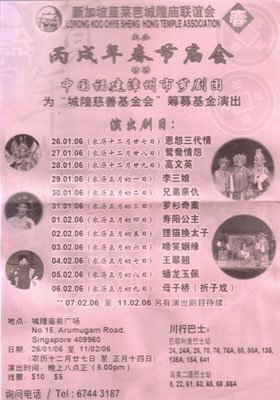
Newsflash - Zhangzhou City Opera Troupe To Perform In Singapore From Today


Zhangzhou City Xiang Opera Troupe will be performing from today till 11 February at Lor Koo Chye Seng Hong Temple (韭菜芭城隍庙) at Arumugam Road, off Paya Lebar Road and behind Geylang Police Station. This is the 3rd time the troupe is coming to Singapore after a lapse of 18 years.

Zhangzhou City Xiang Opera Troupe is a well-established troupe which has produced award winning shows like "The Queen Of Opera" (戏魂), "Legend Of Xi Shi" (西施与伍员) and "The Teacher, The Thief" (三家福). Former actress and currently one of the key figures in the troupe, Zheng Xiuqin, was one of the two first grade actress in this opera genre. Other crew members include artistic director Wu Ziming, who is well-known in the Xiang and Teochew opera scenes local and in China, and composers Chen Bin and Yang Senlin.

The shows the troupe will be staging include "Legend of Li Sanniang" (李三娘), "Muzi Bridge" (母子桥) and "Inside the Forbidden City" (狸猫换太子) as well as some short excerpts like "The Broken Bridge" (断桥) and "Wu Song and Pan Jinlian" (武松杀嫂). Tickets are priced at $5 and $10, and is available at the temple's administration office. For enquiries, please call them at 67443187.

Tuesday, December 20, 2005

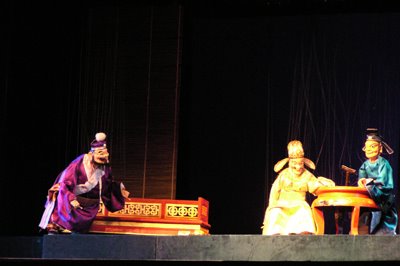
Review: The Royal Inspectorate (Quanzhou String Puppetry)

Title: The Royal Inspectorate (钦差大臣)
Genre: Quanzhou String Puppetry (泉州提线木偶)
Format: Stage puppetry (live)
Production year: 19 December 2005
Director: Lv Zhong Wen, Wei Hong
Script: Wang Jingxian
Music: Lin Jiacai
Scenography: Huang Lianjin
Puppeteers: Chen Yinghong, Xia Rongfeng for Jia Si, Xu Runming, You Youya for Zhu Wu, Zhang Gong, Wu Weigong for Qian San, Huang Wenjun, Fu Ruifeng, Wu Weihong for Mrs. Qian, Meng Suping, Lin Xiaojun for Miss Qian, etc.
At first glance...

Quanzhou (string) Puppetry is a world renowned form of marionette art. In China, though there are other variations of marionette puppetry, this Quanzhou style of string puppetry is the most famous, and having only 1 professional troupe left in the whole of China makes this form of art even more rare and precious.

Synopsis

Jia Si, a down-and-out son of a rich man from the Imperial capital, had to resort to stealing food from the Zhao Xian Hall with his servant and was caught by the lady owner of the hall. She had them locked up in her room and called in the constables. At this same time, the Magistrate’s men were actually busy searching for the Royal Inspectorate, who was reported to have come to the town secretly under disguise. According to news, the Inspectorate was a tall skinny man and with him was his servant, a short and plump man. Jia Si and his servant happened to fit the description, was hence Jia Si was mistaken as the Inspectorate and was welcomed back to the Magistrate’s residence.

Magistrate Qian San and his gang of local authority officials were actually corrupted officials who have sucked money out of their own people. In order to protect themselves, they decided to get close to the “Inspectorate” and tried to bride him with treasures. Qian even get her daughter to seduce Jia Si so as to secure his official post. Miss Qian managed to charm Jia Si, and Qian forced them into wedding.

On the wedding day, however, Jia Si disappeared all of a sudden, leaving behind a poem disclosing his real identity, as well as giving these corrupted officials a bad lashing. At this same time, the real Royal Inspectorate had arrived, sending them into panic once again!

Review

Puppetry is a form of art which one has to appreciate “live” and not through video or television. Somehow, the magical charm of this art form is lost through these technologies. I would say I’m lucky to be able to catch the Quanzhou Puppet Troupe on stage again after a lapse of over a decade. Although personally I still prefer their performances back then compared to now, I still feel that these puppeteers are really remarkable in their artistry. Marionettes are not easy to manipulate, especially with 30-odd 2-meter long strings!

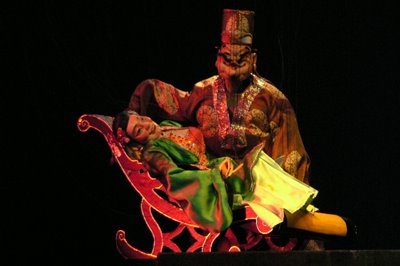
Typical puppetry requires the puppets to imitate the human movements. However for this show, not only did the puppeteers succeed in making the puppets behave very human-like, the director has also added some stunts unachievable by human (under normal circumstances). For example in scene 2, when Magistrate Qian heard that the Royal Inspectorate was going to arrive soon, he sprang up into the air and landed on top of the decorated windscreen on his tummy. This is of course not achievable by human standard, but in puppetry, it adds a sense of comic to the show.

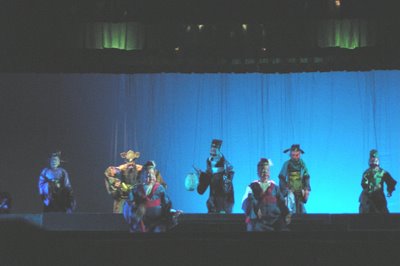
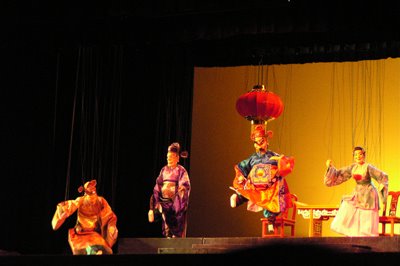
The movement choreography was well done too. In scene 3, where Qian’s gang of local authority officials and their men were out hunting for the Royal Inspectorate, the puppeteers arranged the marionettes into different formations, changing from one to another in midst of their dialogues. Together with the exaggerated running movements of the marionettes, the scene was rather cute yet beautiful.

For scenography, it’s a pity that some parts of the stage settings had to be “sacrificed” when they troupe came over. However, the set still looked quite elegant with its simplified props. What I like about the set was that they had incorporated some props with a modern feel into the scenes. Like in scene 2, there is this big windscreen in the shape of a copper coin (perhaps to hint that Magistrate Qian is a “money-faced” man) which can be rotated like a rotating door. In that scene, Magistrate Qian was hiding behind the windscreen from his fierce wife, and she pushed the windscreen around and caused Magistrate Qian to fall flat on the ground. Something innovative and funny!

This is by far one of the most enjoyable puppet shows so far. The script was quite well-written (adapted from a Russian play) and easy to understand, and the plot is funny and entertaining. The puppeteers are very skillful and they could sing quite well too. This is a highly recommended show, and if there were VCDs or DVDs for this show, I’ll be the first to buy it.

Ratings


Script

Music

Scenography

Puppetery Skills

Final rating
Sunday, December 04, 2005

Review: The Jade Pagoda (Shaoxing Yue Opera)

Title: The Jade Pagoda (珍珠塔)
Genre: Shaoxing Yue opera (越剧)
Format: Stage opera
Production year: Around 2004 - 2005
Director: Sun Hongjiang
Script: Li Li, Huang Yan
Music: Liu Jiankuan
Scenography: Xie Tongmiao, Ding Baodi
Casts: Xu Biaoxin as Fang Qing, Deng Huawei as Chen Cui’E, Zhou Yan’er as Fang Duohua, Gu Aijun as Chen Peide, Qi Chunlei as Old woodcutter, Xu Lai as Cai Ping, Ye Yuanpei as Hong Yun

At first glance...

”The Jade Pagoda” is one of the traditional shows for Shaoxing Yue opera. But unlike most other shows whereby the main focus is on the female leads, this show focuses more on the male lead. This version, a revised version of the old script, was a very recent production, features Xu Biaoxin, an up and rising male Shaoxing Yue opera actor Xu Biaoxin as the male lead, Fang Qing.

Synopsis

Fang Qing was the grandson of a prime minister, but due to political reasons, his family dwindled, with only him and his mother struggling to survive in a graveyard in Henan. He had an uncle, Chen Peide, who was doing well as an imperial official in Xiang Yang and old Mrs. Fang got him to approach them to borrow some money.

It happened that Fang Qing turned up at Chen’s residence on his birthday celebration, much to the discontentment of Fang Duohua, Fang Qing’s paternal aunt. She despised Fang Qing for being poor, and was angry that he made her lose face in front of her guests. Her harsh and unforgiving words left Fang Qing fuming mad and he vowed never to return to Xiang Yang if he failed to become a top scholar. In return, Fang Duohua said that she was willing to kneel down in front of him with a tray of incense urn as a form of welcome (a taboo for an elder to perform to a junior) if he could really make it.

Fang Qing’s cousin Cui’E found out about their quarrel and hence decided to apologise to Fang Qing on her mother’s behalf. She was willing to help Fang Qing, but the latter was however unwilling to accept her financial assistance. Cui’E, who already had a liking for Fang Qing, decided to help in an implicit way; she hid her family heirloom, the jade pagoda, in a box of snacks and asked Fang Qing to take it back for his mother. At this juncture, Chen Peide turned up to stop Fang Qing from leaving. Chen admired Fang Qing for his character, hence decided to betroth Cui’E to him. Fang Qing could not refuse, and hence agreed to the marriage.

While on his way back home, Fang Qing was caught in a snowstorm. Unable to continue his journey due to hunger, he decided to help himself to some snacks first. He was astonished when he found the jade pagoda in the snack box, and finally realised the good intention of his cousin. However, a robber appeared unexpectedly and robbed him of the jade pagoda. Fang Qing was demoralised and wanted to commit suicide, but was saved by an old woodcutter. He decided to give Fang Qing some money so that he could realise his dream.

Fang Qing finally became the top scholar and was appointed as the Chief Inspectorate. He decided to pay a visit to Chen’s residence again, but this time, he shall disguise himself as a Dao Qing (a form of folk singing based on moral and social themes, usually performed by beggars and Taoist priests) singer, hoping to “educate” his aunt.

Fang Duohua, however, remained unmoved by his actions, and was in fact very angry that his songs were all pinpointing at her. Chen Peide and Cui’E however, welcomed Fang Qing warmly. When Fang Qing’s subordinates turned up to look for Fang Qing, everyone finally realised that Fang Qing had really became a top scholar. Fang Duohua was ashamed of her past actions, and decided to accept Fang Qing as her son-in-law wholeheartedly.

Review

This remake of “The Jade Pagoda” features a big change of the original script. In the original script, there was no woodcutter, and instead of Fang Qing educating his aunt, the original version featured Fang Qing trying to shame his aunt, and was reprimanded by his mother for being unforgiving. According to the director, such a change was done to bring out the essence of hope after a mishap, and to soften the original “hatred versus hatred” feel. This was a good attempt, though I’d prefer to see Fang Qing shaming his aunt!

Although I have not seen the original version by Lu Jinhua, somehow I have this feeling that this show was tailor-made for Xu Biaoxin. For a start, he used to be a top actor in Changzhou Xi Opera Troupe, but was said under strong recommendation to be transferred to Shanghai Yue Opera Company, and then subsequently heavily promoted by the troupe. “The Jade Pagoda” happened to be the best show to showcase his talent, since the male lead has quite significant role. Also, I felt that he has got a lot of singing parts, at times to the point of almost becoming too excessive. But nevertheless, his singing was really quite good, and he managed to perform all the stunts designed for his role in the third scene, the scene where he was trapped in a snowstorm and met a robber.

As for the rest of the cast, Zhou Yan’er and Deng Huawei, who acted as Fang Duohua and Chen Cui’E, were not bad as well, but others were average. Zhou Yan’er’s portrayal of Fang Duohua was not as clownish as compared to others, but more mean and unfeeling. This might have been the director’s idea, but somehow I felt that it dimmed down the role of fang Duohua quite a bit. For example, when Fang Duohua was singing how big and nice the Fang Residence she used to live (before she was married to Chen Peide), her straight face and prim and proper actions just do not match with her exaggerating lyrics. Deng Huawei’s rendition of Chen Cui’E was not too good in my opinion too. Although her singing and shen duan were not bad, I think the role of Chen Cui’E should be more elegant and matured, so as to bring a contrast between her and Fang Qing, for she’s supposed to be older than Fang Qing. Gu Aijun, who took on the role of Chen Peide, could sing well too, but his shen duan was rather average. One actor I wanted to point out was Xu Lai, who acted as Cui’E’s maid Cai Ping in the show. I felt she has potential to become a good actress, but her singing could pose a problem as her voice sounded deep.
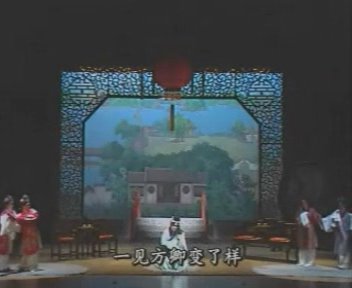
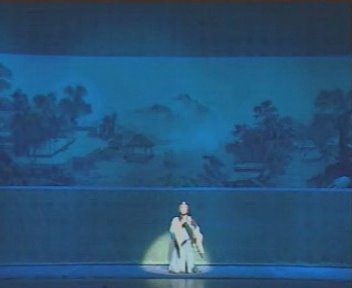
Script and cast apart, one other highlight of the show was the scenography. One can’t help but to think of the remake of “Dream of the Red Chamber”, as the style of the set resembled that of “Dreams”, but on a slightly smaller scale. One aspect of the scenography I like is the secondary curtain. Instead of the conventional draw curtain, they used a big traditional Chinese scroll painting as a secondary curtain which I think went well with the overall set. The painting, which features a scenery painted the Jiangnan style, added a touch to beauty to the set, giving a hint of how beautiful Xiangyang city was.
To sum things up, I think this show is indeed not bad, but could improve further. In terms of acting, the actors’ shen duan were not bad, but just lack the extra touch to make their character more outstanding. Perhaps with time they’d improve, and I hope they do!

Ratings


Script

Music

Scenography

Casts

Video quality

Final rating